Garage Floor Coatings: The Complete Guide to Premium Full Flake Systems by Roder Epoxy
Garage floor coatings are one of the most effective ways to protect, strengthen, and enhance the concrete in your garage. Whether you’re a homeowner in Iowa City, Coralville, North Liberty, Tiffin, or Cedar Rapids, a well-installed coating system offers remarkable improvements in durability, appearance, and long-term performance.
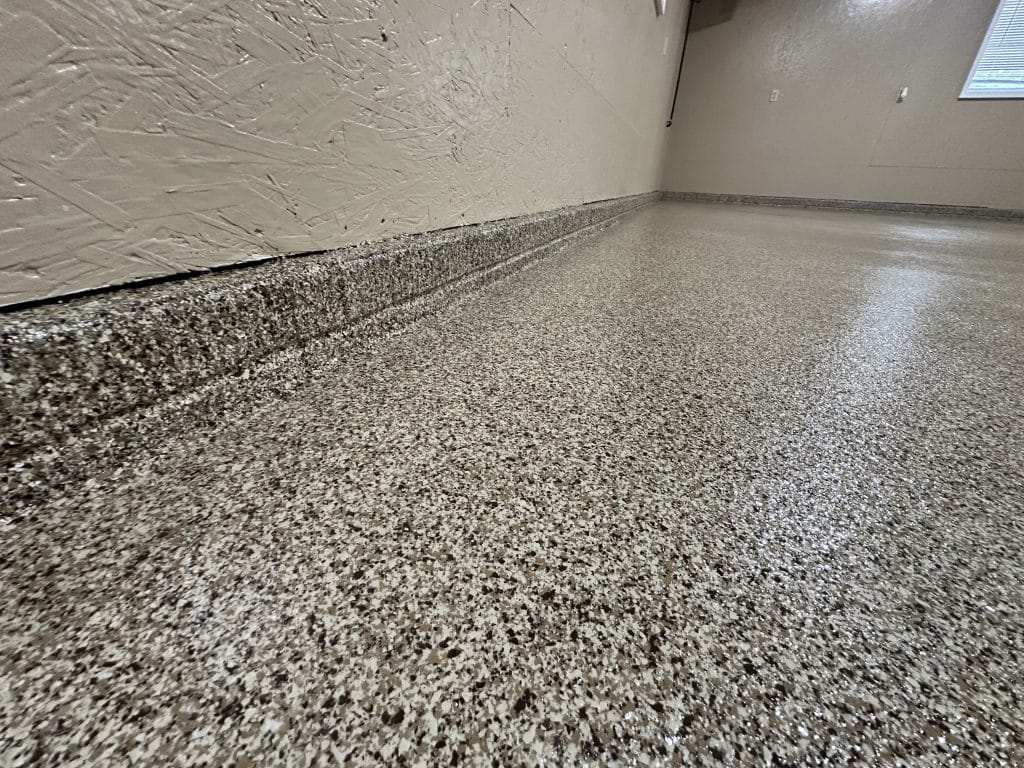
At Roder Epoxy, our specialty is the Full Flake System—a thick, multi-layer coating built using a 100% solids epoxy base coat, a full broadcast of resin-based vinyl/acrylic flakes, and a UV-stable polyaspartic topcoat. This two-day process delivers superior adhesion, better protection, and a more refined finish than fast, one-day polyaspartic systems.
This guide explains everything you need to know about garage floor coatings—from the installation process to the differences between epoxy and polyaspartic, to how we compare with major competitors like TSR Concrete Coatings.
What Are Garage Floor Coatings? A Clear, Homeowner-Friendly Explanation
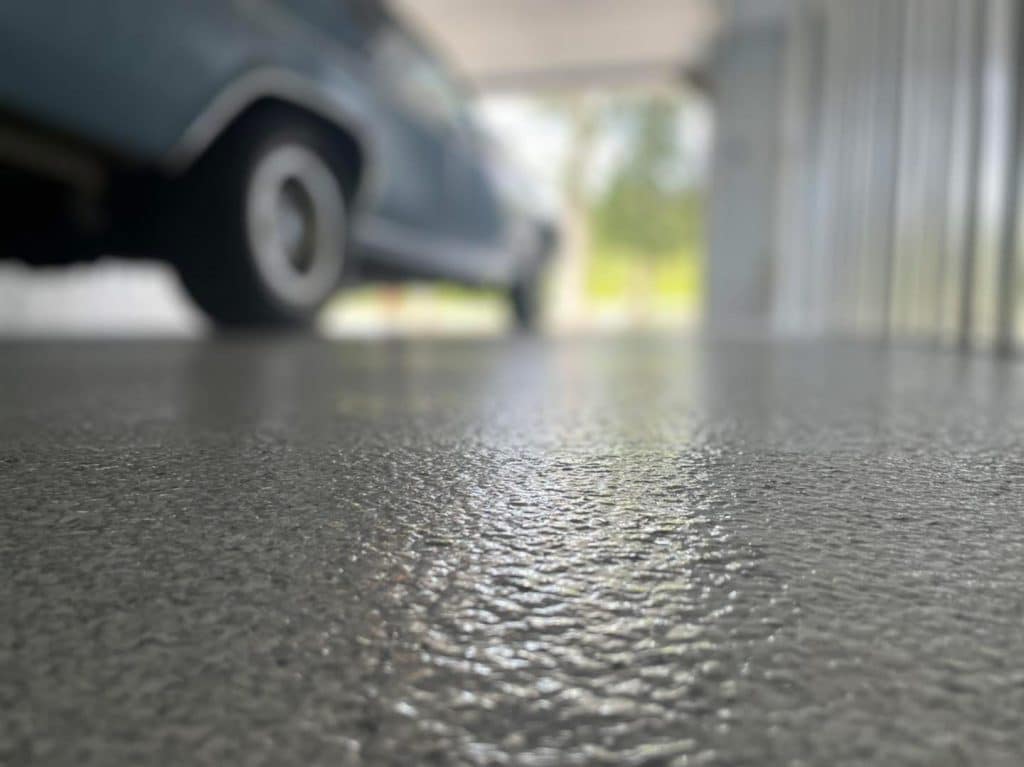
Garage floor coatings are multilayer systems applied to concrete surfaces to improve strength, protection, safety, and appearance. While many homeowners picture a simple “paint-like” product, a true professional-grade system involves several steps and multiple layers designed to work together.
High-performing garage floor coatings typically include:
- Concrete grinding and profiling
- 100% solids epoxy base coat for deep adhesion
- Full broadcast of resin-based vinyl/acrylic flakes
- Polyaspartic topcoat for UV stability and chemical protection
These multilayer systems transform bare concrete into a durable, easy-to-clean surface that resists scratching, staining, moisture, road salts, and chemicals.
Why Homeowners Choose Professional Garage Floor Coatings Over DIY Kits
- DIY kits often lead to frustration and failure because they:
- Skip crack repair and surface prep
- Rely on thin, water-based epoxy
- Lack UV stability
- Cannot broadcast flakes to rejection
- Peel when moisture pushes upward
Professional garage floor coatings deliver long-term performance because experts use industrial grinders, commercial-grade materials, and a multi-layer installation method proven to last.
Benefits of a Full Flake Garage Floor Coatings System
Durability, Longevity & Surface Adhesion
Roder Epoxy starts every project with industrial concrete grinding, opening the pores of the concrete and allowing epoxy to soak in. This is the foundation of durability.
A full flake system prevents:
- Hot tire pickup
- Peeling
- Scratches
- Moisture-related failure
- Impact damage
When installed correctly, a garage floor coating can last well over a decade.
Slip Resistance, Texture & Decorative Color Depth
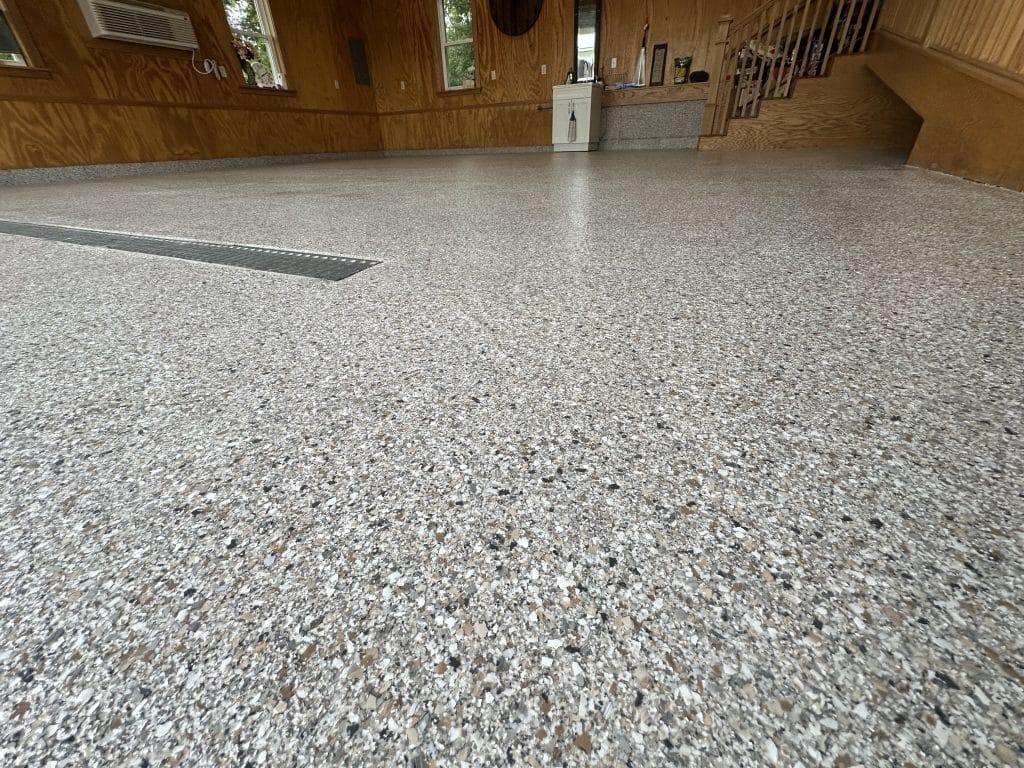
The full broadcast of resin-based flakes creates:
- Natural texture for slip resistance
- A richer color pattern
- A visually appealing full-coverage finish
Unlike partial-flake systems, full coverage hides imperfections and gives the floor a premium, granite-like appearance.
UV Stability, Chemical Resistance & Wear Protection
The polyaspartic topcoat shields against:
- Yellowing
- Gasoline
- Oil
- De-icing salt
- Household Cleaners
- Winter slush and moisture
This premium final layer is designed for real-world wear in Iowa’s climate.
The Roder Epoxy Two-Day Garage Floor Coatings Process (Step-by-Step)
-
Step 1: Concrete Grinding & Profiling for Adhesion
We mechanically grind the concrete using industrial diamond grinders. This removes surface contaminants and opens the pores of the slab. Grinding creates the proper mechanical profile needed for maximum adhesion. Skipping this step often leads to early coating failure, which is why many one-day systems fail.
-
Step 2: Crack Repair, Joint Work & Surface Patching
We repair cracks, pits, spalling, and damaged joints before coating. This creates a smooth, reinforced surface that supports long-term durability. Competitors often skip this step because it takes time, but it’s essential for a premium finish.
-
Step 3: Thick 100% Solids Epoxy Base Coat Application
We apply a thick, 100% solids epoxy base coat that soaks deeply into the concrete. This base layer creates excellent adhesion and forms the structural foundation of the entire system. The added thickness greatly improves durability and lifespan compared to thin, fast-dry coatings.
-
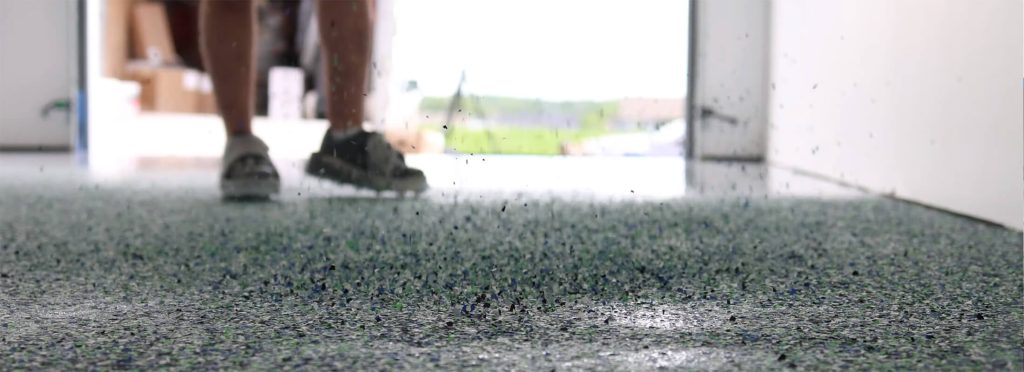
Step 4: Full Broadcast-to-Rejection Using Resin-Based Vinyl/Acrylic Flakes
We broadcast resin-based flakes across the entire surface until the floor cannot hold any more. This “broadcast to rejection” method ensures full coverage, color consistency, texture, and slip resistance. It produces a more durable and visually appealing finish than partial flake systems.
-
Step 5: Next-Day Flake Recovery & Smoothing
Once the coating cures, we scrape and vacuum the entire floor to remove loose flakes. This step smooths the texture and prepares the surface for the topcoat. It ensures the final finish is even, clean, and ready for long-term protection.
-
Step 6: Polyaspartic Topcoat for Long-Term Protection
We apply a premium, UV-stable polyaspartic topcoat as the final layer. This coating adds gloss, scratch resistance, UV stability, and chemical protection. Epoxy creates the foundation of the system, and polyaspartic provides the long-term shield.
Roder Epoxy Two-Day Delivery vs. Speed-Coat One-Day Floor Coatings
Why “Speed-Coat” Systems Are Thinner and Less Durable
- Thin polyaspartic base coats dry too fast to soak into the concrete
- Crack repair and patching are often skipped
- One-day installs limit material thickness
- Less adhesion = higher chance of peeling
Roder Epoxy’s two-day system focuses on strength rather than speed.
Adhesion, Curing Time & Temperature Considerations
A rushed cure is never ideal. True adhesion requires:
- Ground concrete
- Time for epoxy to penetrate
- Controlled cure rates
This is especially important in Iowa’s variable weather.
Epoxy vs Polyaspartic Garage Floor Coatings: Understanding the Difference
When Epoxy Is the Right Choice
- Thicker application
- Stronger adhesion
- Better for irregular or older concrete
- Ideal as a base coat for flake systems
When Polyaspartic Is the Right Choice
- UV stability
- Fast cure rates (as a topcoat)
- Chemical resistance
- Scratch protection
The best systems—including Roder Epoxy’s—use epoxy AND polyaspartic together.
Garage Floor Coatings FAQs
How long does installation take?
- Roder Epoxy uses a two-day process for maximum adhesion and durability.
What’s the difference between epoxy and polyaspartic?
- Epoxy = adhesion and thickness.
- Polyaspartic = UV stability and protection.
Are polyaspartic floors the same as epoxy floors?
- No. Polyaspartic cannot replace epoxy as a base coat in high-quality systems.
Do you offer a warranty?
- Yes—a 10-year manufacturer warranty on materials.
Can I do my own Garage Floor Coating with a DIY kit?
- DIY kits lack the grinding, thickness, and curing control required for long-term success.
Get a Free Quote From Eastern Iowa’s Trusted Garage Floor Coatings Company
Ready for a better-looking, longer-lasting garage floor?
Roder Epoxy delivers thick, durable, premium-grade Garage Floor Coatings that outperform one-day polyaspartic systems.